Industry Deployments & Operating Tolerances
Detailed engineering specifications, metallurgical selections, and certified performance benchmarks tailored for critical fluid dynamics, sanitary processing, and polymer melt separation.
High-Pressure Sour Gas & Hydrocarbon Fractionation
Corrosion-resistant Dutch weaves engineered for extreme differential pressure and acidic media.
Critical Failure Modes Mitigated
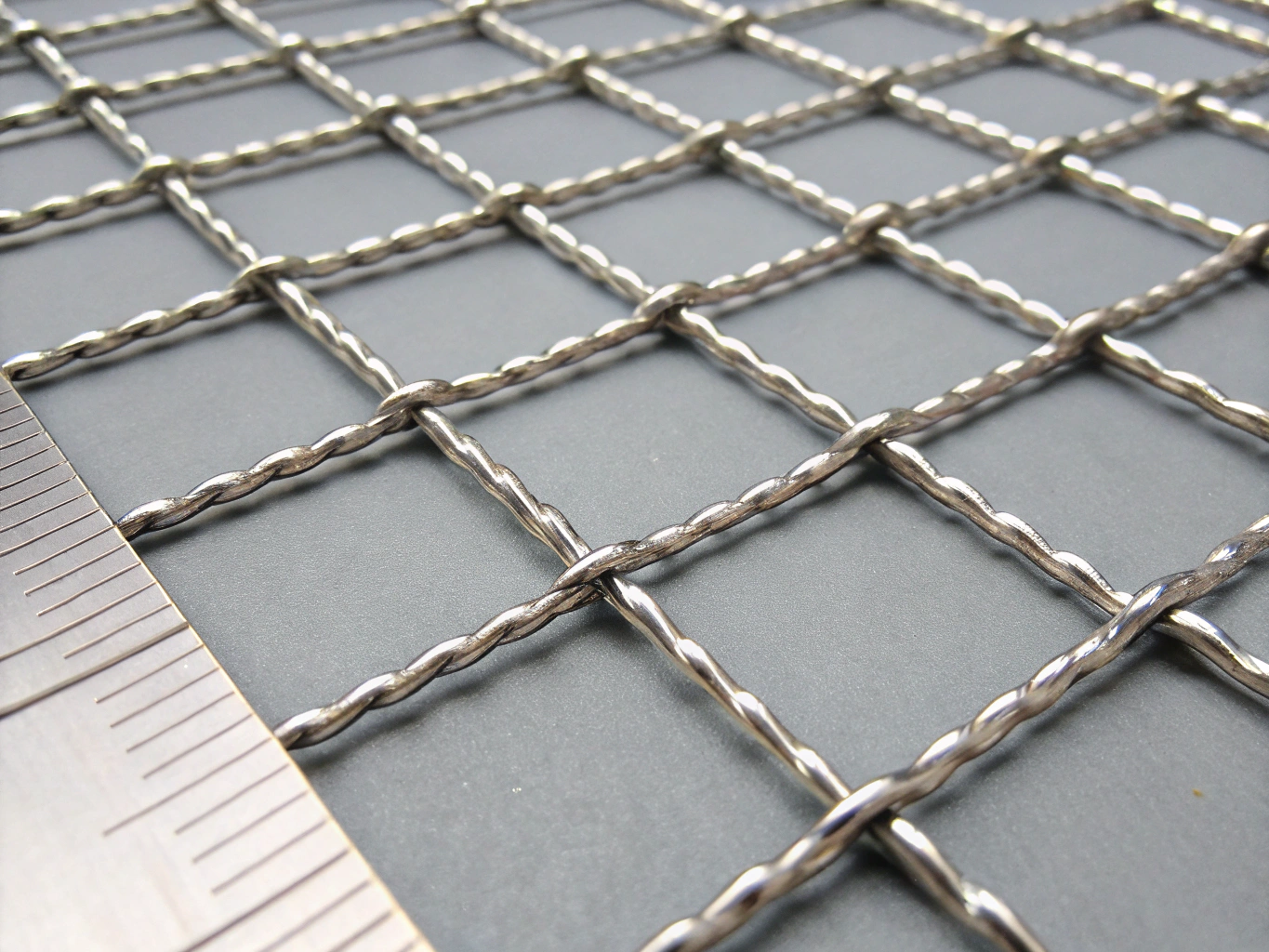
Fully documented with Material Test Reports (MTR) according to EN 10204 3.1 standards.
| Parameter Specification | Standard Value | Engineering Tolerance |
|---|---|---|
| Mesh Count (Warp x Weft) | 72 x 450 mesh/inch | ±1.5% |
| Aperture Geometry | Slotted Pore Channel | DIN ISO 9044 |
| Wire Diameter (Warp / Weft) | 0.18 mm / 0.12 mm | ±0.003 mm |
| Metallurgical Standard | ASTM B462 / UNS N08020 | MTR Traceable |
| Surface Finish | Electropolished Passivated | Ra < 0.4 µm |
Operational Yield via Aperture Stability
Calculated mechanical gains when switching from standard wire cloth to precision calendered and sintered stainless steel weave matrices.
vs. Standard Commercial Weaves
Rigid pore geometry eliminates turbulence induced by aperture deflection under 40 bar differential pressure.
Cycle Duration Reduction
Calendered smooth surface profile enables rapid particulate release, lowering clean-in-place fluid consumption.
Extended Mean Time Between Failures
Precision metallurgical annealing in 316L and Alloy 20 prevents localized stress corrosion cracking in cyclic loads.
Laboratory Test Bench Comparison
| Engineering Parameter | MutualFilter Spec |
|---|---|
Aperture Tolerance (Pore Size) Generic: +/- 8.0 um (Industrial Grade) | +/- 1.5 um (Strict Calibrated) |
Tensile Warp/Weft Uniformity Generic: 82.0 – 89.0% | >= 98.4% Uniform |
Maximum Operating Delta-P Generic: 22.0 Bar (Deformation threshold) | 65.0 Bar (Continuous) |
Surface Roughness (Ra) Generic: 1.2 – 2.8 um (Raw Drawn) | < 0.45 um (Electropolished) |
Test parameters conducted in accordance with ASTM E2814 and ISO 4022 utilizing clean demineralized water and standardized test dust ISO 12103-1 A3 medium.
Sector-Specific Realization
Zero-Defect Melt Filtration at 380 deg C
Nominal Rating
5 um – 80 um
Alloy Grade
AISI 316L / 904L
Burst Strength
120 Bar
- Sintered multi-layer laminate resists polymer gel shear stresses
- Complete chemical resistance to aromatic hydrocarbons & ketones
- Fully traceable heat lot certificates with 3.1 inspection reports