Engineered wire mesh for continuous polymer and plastic extrusion.
Maintain steady melt flow and filter contaminants with precision-woven stainless steel screen packs, sintered discs, and cylindrical elements built for high operating pressure.
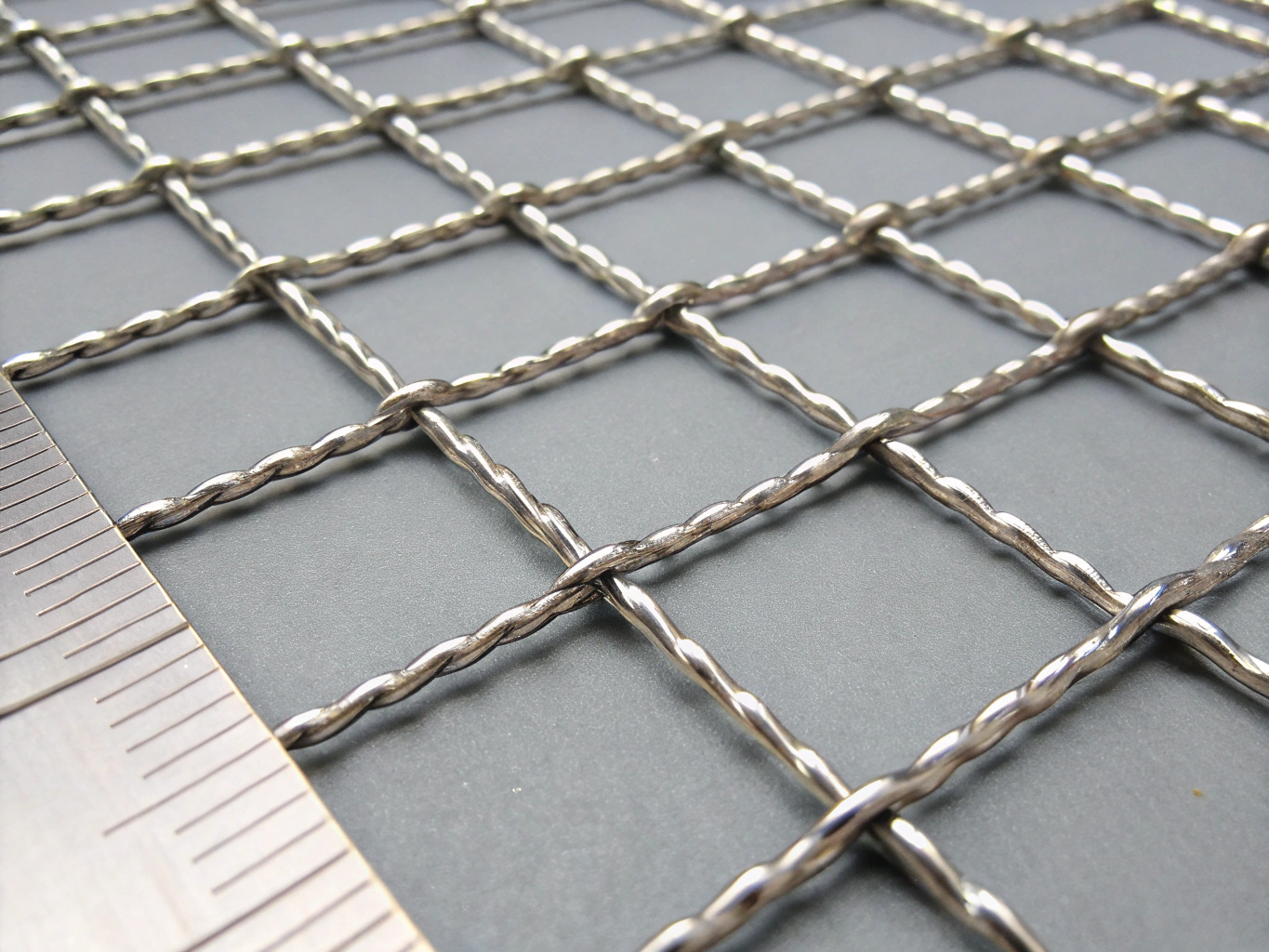
Engineering Specifications
Custom TolerancesExtrusion screen pack guide
Select the right mesh counts, layer structures, and wire diameters to balance melt cleanliness with stable head pressure across continuous plastics and rubber extrusion lines.
Target mesh count depends on downstream tolerances. Film and optical sheet demand 100 to 325 mesh (40-150 micron), while structural profiles and pipe run 20 to 60 mesh.
Always sandwich fragile fine mesh between coarse support layers. Spot-welded or aluminum-rimmed packs ensure workers install the assembly in the exact orientation required.
Higher mesh counts cause rapid differential pressure spikes. Select wire diameters with sufficient open area percentage to prevent melt temperature rise and screen blowout.
Screen pack layer configurations
Compare cross-section layer sequence for standard vs heavy-duty melt filtration.
Symmetrical sandwich prevents inverted installation error on production floor.
| Layer Position | Mesh Specification | Wire / Aperture | Function |
|---|---|---|---|
| 1. Upstream Layer (Melt Entrance) | 20 Mesh | 0.41 mm (0.016 in) / 860 Micron | Captures coarse unmelts and protects the fine filtration wire. |
| 2. Center Control Layer | 100 Mesh | 0.10 mm (0.004 in) / 154 Micron | Defines nominal filtration rating and stops carbonized specs. |
| 3. Downstream Support (Against Breaker Plate) | 20 Mesh | 0.41 mm (0.016 in) / 860 Micron | Prevents the fine control mesh from extruding into breaker plate holes. |
Screen pack selection matrix by resin & process
Typical configurations used in industrial extrusion facilities worldwide.
| Polymer & Grade | Extrusion Process | Recommended Mesh Pack | Filtration Aperture | Operating Delta P |
|---|---|---|---|---|
| LDPE / LLDPE Film | Blown film extrusion | 20 / 60 / 100 / 20 Mesh | 140 – 150 Micron | 800 – 1,400 PSI |
| HDPE / PP Sheet | Flat die cast sheet | 20 / 40 / 80 / 40 / 20 Mesh | 175 – 190 Micron | 1,000 – 1,800 PSI |
| PET / Polyester | Bottle preforms & strapping | 30 / 100 / 200 / 30 Mesh | 70 – 75 Micron | 1,500 – 2,600 PSI |
| Post-Consumer Recycled (PCR) | Pelletizing & compounding | 20 / 40 / 60 / 80 / 20 Mesh | 180 – 250 Micron | 1,800 – 3,200 PSI |
| Engineering Resins (PA/PBT) | Technical profile & compounding | 40 / 120 / 325 / 40 Mesh | 40 – 45 Micron | 2,000 – 3,500 PSI |
Pressure dynamics & screen pack failure prevention
Melt pressure management is critical to protecting screw drives, avoiding barrel leakage, and maintaining gauge uniformity.
Head pressure & backpressure balance
A screen pack creates required backpressure to improve resin homogenization and melt temperature uniformity. However, excessive differential pressure causes shear heating, polymer degradation, and output drops.
Breaker plate hole span & pack blowout
Fine wire cloth has low tensile strength under fluid pressure. Without a stiff coarse support wire (typically 20 to 30 mesh) facing the breaker plate, the fine screen extrudes into the holes and tears.
Contaminant cake buildup rate
As particulate builds on the upstream screen, open area decreases logarithmically. Selecting a layered pack with progressive aperture gradient extends online life by capturing debris across depths.
Never run single-disc fine mesh (100+ mesh) directly against a breaker plate without downstream coarse reinforcement. Fluid shear pushes the fine wires into the holes, causing wire shearing and un-filtered contaminants in the die.
For continuous screen changers, verify edge spot-weld integrity and rim sealing to prevent molten polymer bypassing around perimeter gaps.
Spot-Welded Packs: Economical, securely bonded perimeter points ensure correct stacking sequence during rapid manual changes.
Aluminum/Copper Framed Packs: Crimped metal border acts as a high-pressure gasket, eliminating polymer edge leakage in high-viscosity lines.
Sintered Multilayer Discs: Diffusion-bonded solid composite for automated continuous belt screen changers.
Need custom diameter discs or tailored mesh combinations?
MutualFilter produces stamped screen packs, circular discs, kidney shapes, and cylinder screens in customized stainless steel 304, 316, and 316L wire alloys.
Request a custom mesh quotation
Share your mesh count, wire diameter, alloy grade, and delivery schedule. Our technical team calculates precise tolerances, flow capacities, and volume pricing for your application.
- ASTM E2016 & ISO 9044 compliance
- AISI 304, 316L, 904L, Monel & Inconel alloys
- Apertures from 1 micron to 25mm opening
- Export-grade timber crating & moisture barrier packaging
Production Assurance
Engineered for OEM filtration builders and industrial plants
24-hour quote turnaround
Rapid pricing and lead time validation for standard and custom specifications.
Material mill test certificates
Full traceability with 3.1 chemical and mechanical inspection reports.
Custom fabrication options
Slit coils, stamped filter discs, multi-layer sintered packs, and fabricated cylinders.