Filter Cloth
Dutch Woven Wire Cloth
MutualFilter supplies precision stainless steel dutch-woven filter cloth engineered for critical solid-liquid separation, high differential pressure environments, and continuous polymer extrusion. Explore our dedicated weave constructions below to match your process micron rating and mechanical load requirements.
Filter Cloth Weave Types & Dedicated Pages
Select a specialized weave type for in-depth data tables & micron charts
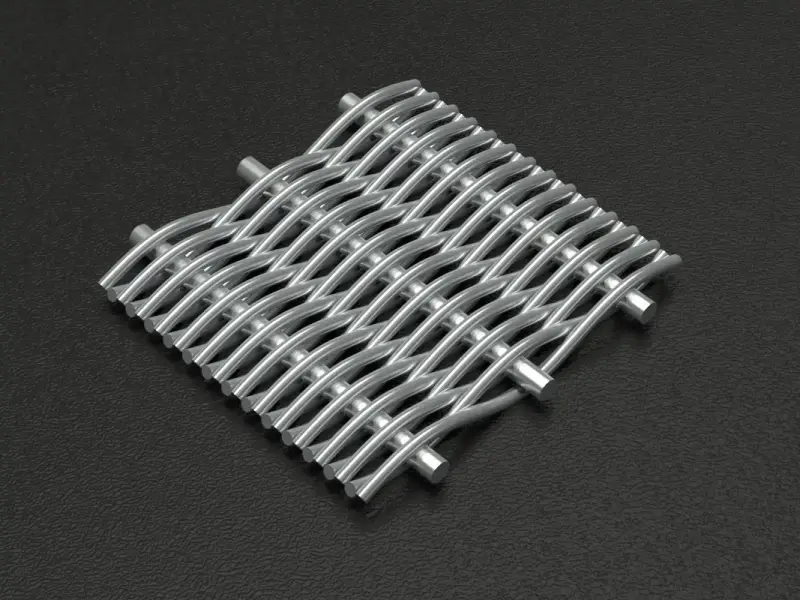
Plain Dutch Weave
Standard Dutch weave with coarse warp wires and tightly hammered weft wires, creating direct zero line-of-sight pore channels for liquid-solid separation.
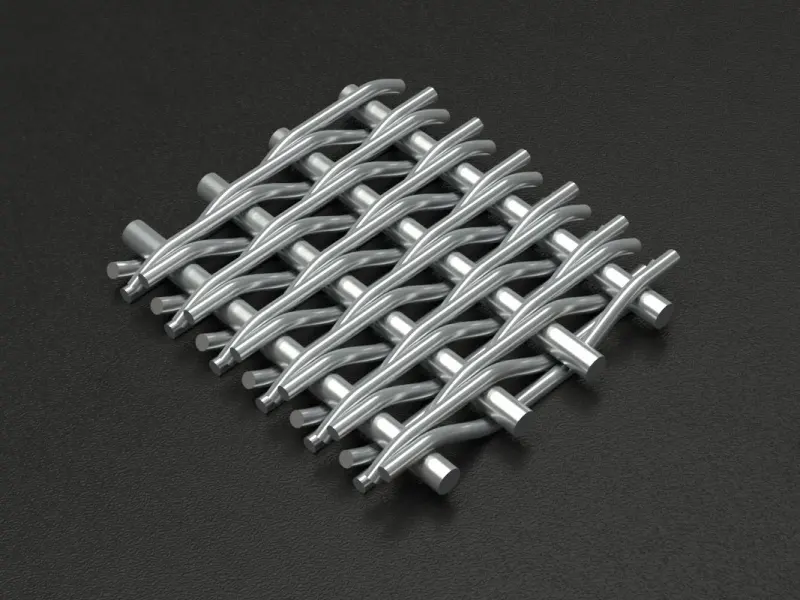
Twill Dutch Weave
Combines Dutch weave and twill technique allowing double the wire density. Yields micro-apertures down to 1–2 microns under severe differential pressures.
Reverse Dutch Weave
Thinner, high-density warp wires crossed by heavy weft wires. Engineered for continuous auto-screen belt filters and high tensile mechanical stress.
1 to 400 Micron Range
Precision pore geometry across single & twilled Dutch weaves
AISI 304 / 316L / 904L
Full metallurgical traceability with 3.1 chemical test certs
Continuous Belts & Discs
Custom slit coil widths from 10 mm to 2000 mm master rolls
Technical Comparison & Structural Profile
Switch between Dutch and Reverse Dutch weaves to compare geometry and mechanical focus.
Plain & Twilled Dutch Weave
Fine aperture openings down to 1-2 microns with dense weft wire packing.
Standard Dutch weave utilizes coarse warp wires spaced widely and fine weft wires driven tightly together. This creates zero direct line-of-sight through the mesh, forcing fluids through wedge-shaped microscopic pore channels for exact particle retention.
Primary Engineering Advantages
Dutch & Reverse Dutch Weave Specifications
Engineered for high-pressure differential filtration, particle retention down to 1 micron, and continuous mechanical operation. Compare standard flow profiles, physical wire metrics, and structural integrity parameters below.
Warp and weft differential packing creates tortuous micro-channels that maintain uniform laminar flow under high viscous fluid dynamics.
Heavier warp wires in standard Dutch or tightly packed reverse warp orientations resist deformation under extreme hydraulic cycling.
Precision cold-drawn wire configurations permit repeated ultrasonic and backflush cleaning cycles without aperture shift or media migration.
Standard Dimension & Mesh Charts
Select a weave structure to review warp/weft diameters, micron thresholds, and target applications.
Recommended for surface filtration and solid-liquid separation down to 25 microns.
| Mesh (Warp x Weft) | Warp Wire | Weft Wire | Nominal (µm) | Absolute (µm) | Weight | Primary Application |
|---|---|---|---|---|---|---|
| 12 x 64 | 0.58 mm | 0.40 mm | 280 μm | 310 μm | 2.35 kg/m² | Polymer straining, heavy oil filtration |
| 24 x 110 | 0.35 mm | 0.25 mm | 120 μm | 145 μm | 1.95 kg/m² | Chemical slurries, hydraulic intake screens |
| 30 x 150 | 0.25 mm | 0.18 mm | 90 μm | 105 μm | 1.65 kg/m² | Fuel line pre-filters, pressure vessels |
| 50 x 250 | 0.14 mm | 0.11 mm | 55 μm | 65 μm | 1.20 kg/m² | Process water, paint & pigment clarifying |
| 80 x 700 | 0.10 mm | 0.07 mm | 25 μm | 32 μm | 0.95 kg/m² | Pharmaceutical API separation, aerospace lube |
Bubble Point Validation
ASTM F316 test protocols correlate absolute micron cut-off ratings with calculated pressure differential curves.
Material Traceability
Positive Material Identification (PMI) spectral analysis and mill test reports provided with every production heat lot.
AISI 304, 304L, 316, 316L, 904L, Hastelloy C-276, Alloy 20, Monel 400, Inconel 600.
Weave Geometry & Application Guidelines
Key operational parameters governing differential pressure, particle retention mechanisms, and alloy selection.
Plain Dutch uses heavy warp wires spaced apart with fine weft wires driven tightly together. Reverse Dutch places fine warp wires close together over heavier weft wires to deliver maximum longitudinal tensile resistance for continuous melt screen changers.
Unlike square mesh with straight line-of-sight openings, Dutch weave generates angled, wedge-shaped micro-apertures. This captures fine particulates on the surface while retaining depth-filtration stability under pulse cycles.
Standard stock includes AISI 304, 304L, 316, and 316L stainless steels. Specialized configurations in Alloy 20, Hastelloy C-276, Monel 400, and Inconel 600 are manufactured to custom project requirements.
Need Non-Standard Mesh Ratios or Calendered Mesh?
Our engineering team provides custom weave calculations, burst pressure analysis, ultrasonic slitting, and disc stamping to your OEM drawing specifications.
Filter Cloth Applications
Engineered stainless steel woven wire mesh designed for critical solid-liquid separation, high-pressure slurry recovery, and exact particulate retention across severe process environments.
High differential pressure tolerance and precise micron retention for synthetic fiber and resin extrusion.
Corrosion-resistant alloy weaves built for continuous acidic and alkaline slurry separation.
Critical aerospace and automotive grade particulate capture under high flow velocities.
Sanitary cleanroom-certified stainless meshes for active pharmaceutical ingredient isolation and cake filtration.
Request a Custom Quote for Dutch & Reverse Dutch Mesh
Direct manufacturing supply for OEM builders, process engineers, and filtration assemblers. Whether you require standard master rolls, slit tape for continuous auto-screen changers, or tailored micron disc packs, our technical team provides rapid feasibility reviews and tiered volume pricing.
Certified material test reports for 304, 316L, 904L, and Hastelloy alloys.
Engineering reviews and spec-matched pricing delivered within one business day.
Continuous slit tape for auto-screen changers and custom multilayer disc packs.