Powder & particle screening
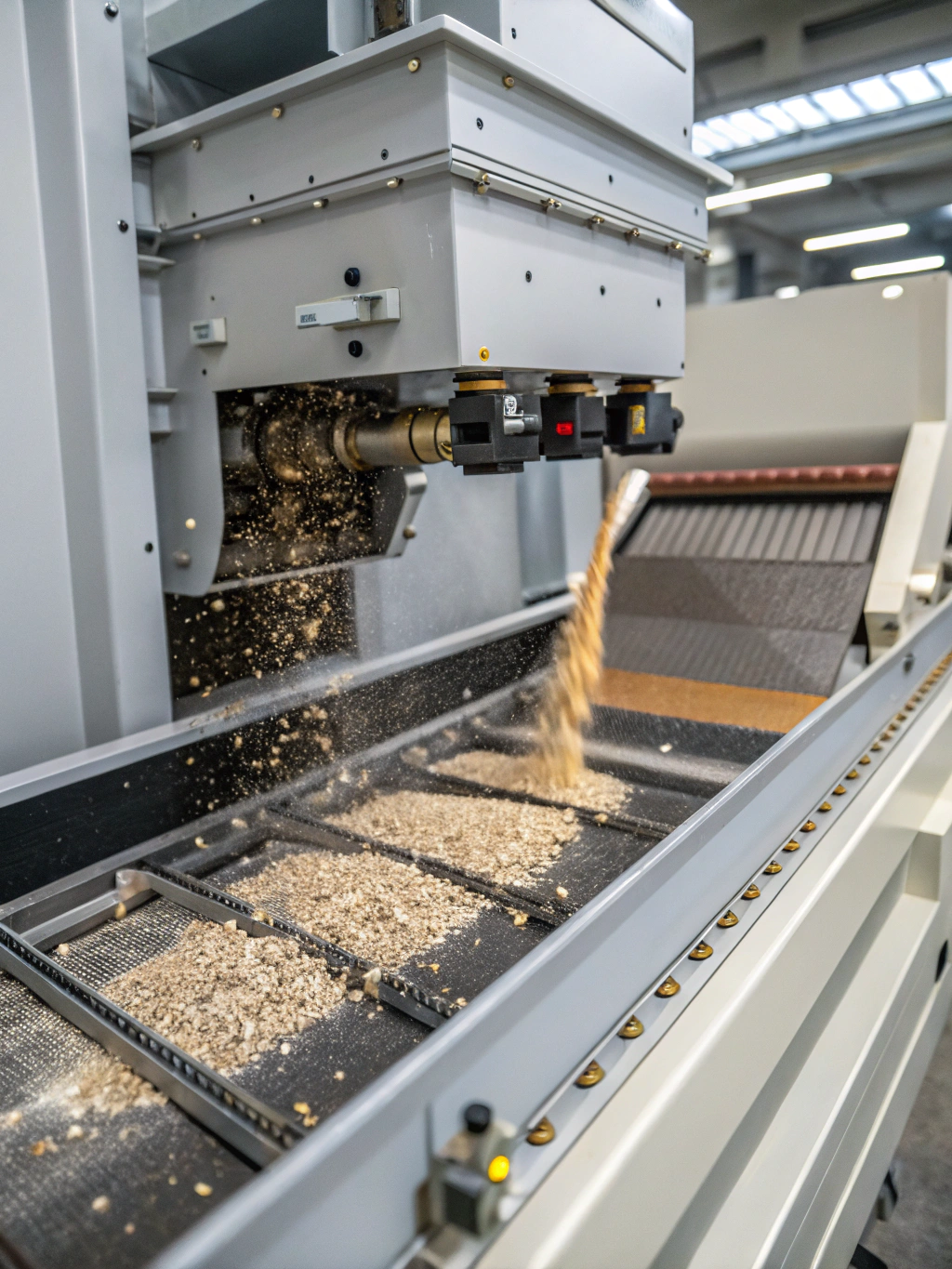
Powder and particulate processes require precise mesh screening for accurate particle classification and sizing.
Engineered woven wire mesh maintains rigid aperture tolerances and predictable throughput across dry and wet processes. Each specification supports vibratory, ultrasonic, and centrifugal separators without blinding or premature fatigue.
Uniform aperture spacing from 20 μm to 10 mm
AISI 304, 316L, and specialized stainless grades
Pre-tensioned circular, rectangular, or hook-strip panels
Overview
Industrial particle classification & dry sieving dynamics
Powder screening and dry sieving require consistent wire aperture geometry to deliver reliable particle cut-points across bulk chemical, pharmaceutical, metallurgical, and food processing lines. Precise aperture distribution prevents mesh blinding while maintaining constant volumetric throughput under continuous vibrating and gyratory motion.
High-precision square weave wire mesh acts as the critical separation medium, where wire diameter, aperture tolerance, and surface roughness directly influence classifying efficiency. Selecting the correct weave stability and tension ensures tight particle size distribution (PSD) without contamination or premature wire fatigue.
Filtration Requirements
Key criteria for specifying woven stainless steel mesh in screening separators.
Consistent square aperture geometry prevents blinding and assures reproducible cut-point separation down to 20 microns.
Strict control over wire diameter and aperture uniformity limits oversized bypass in pharmaceutical, chemical, and metal powder grading.
Supplied in circular pretensioned frames, roll goods, or edged rectangular panels compatible with ultrasonic and vibratory separators.
High tensile cold-drawn stainless steel resists abrasive powder friction and high-cycle vibration without wire displacement.
Require custom screen mesh specifications or test certificates?
Download our ISO/ASTM mesh count charts or discuss your particle cut with an engineer.
Solutions & Product Options
Select the specific weave architecture engineered for your screening accuracy and volumetric flow.
Key Selection Factors
Evaluate aperture tolerances, hydrodynamic throughput, and alloy fatigue before specifying production mesh.
Mesh count and aperture accuracy
Target particle size controlTarget particle cut points dictate nominal aperture tolerances to prevent particle bypassing or blinding.
Screen open area versus throughput
Flow efficiency & delta PBalances open aperture percentage against structural wire diameter to maximize volumetric hourly output.
Wear resistance under abrasive powders
Alloy selection (304 / 316L)High-grade 316L, 304, or specialty alloys resist erosion during continuous dry mineral and chemical vibration.
Weave type for classification precision
Plain vs. Twill dynamicsPlain square weaves deliver predictable pass rates, while twilled patterns support finer micro ratings.
Mesh replacement and service life
Uptime optimizationOptimized tensile wire tensioning reduces cyclic fatigue, prolonging maintenance intervals in automated lines.
Specify mesh for your exact operating conditions
Send your targets for alloy grade, aperture rating, and dimensional limits. Our technical specialists return drawing reviews, verification specs, and volume pricing within one business day.
Material alloy
304, 316L, 904L, Hastelloy, Monel
Aperture & weave
1 µm to 5 mm, plain, twill, Dutch
Dimensions & form
Rolls, slit coils, stamped discs, cylinders
Operating limits
Delta P, thermal load, fluid chemistry