Oil & fuel filtration applications
Lubricating oil, hydraulic oil and fuel systems require reliable particle contamination control under pressure.
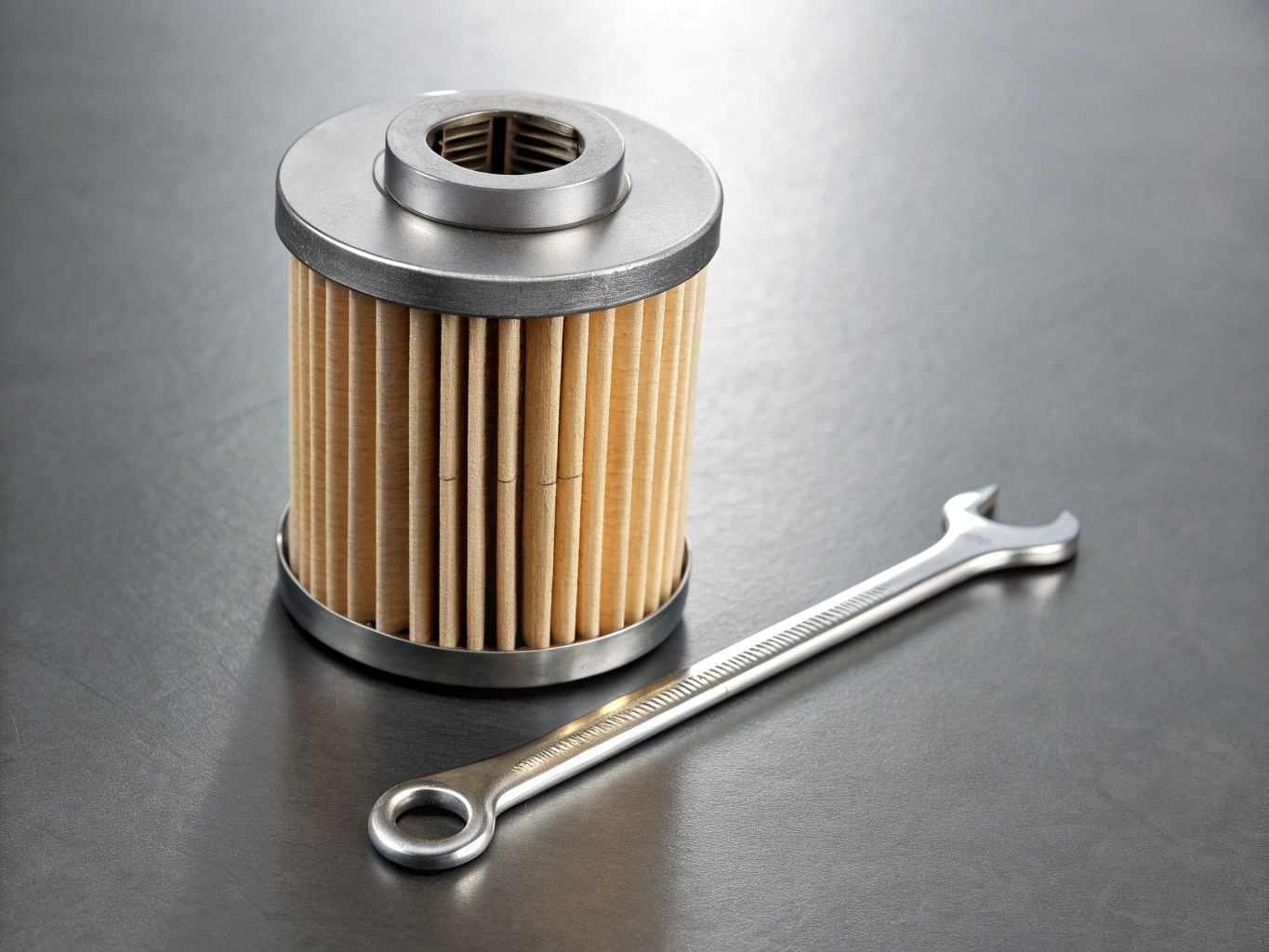
Precision woven wire mesh cartridges safeguard high-tolerance valves, pumps, and injectors from catastrophic abrasive wear. Designed for differential pressure stability and repeated ultrasonic cleanability.
Technical Specification Spec-Sheet
Fluid Conditioning & High-Performance Mesh Engineering
Overview
Reliable industrial machinery depends on continuous fluid cleanliness. Lubricating oil, hydraulic oil, and fuel streams carry hard particulate contaminants, wear debris, and varnish precursors that erode precision tolerances.
MutualFilter stainless steel wire mesh elements provide exact pore geometry and mechanical rigidity. They capture solid particulates across high-viscosity oil flows without shedding media fibers, protecting downstream hydraulic servos, bearings, and high-pressure fuel pumps.
Target Fluid Streams
- Lubricating oil systems (turbines, bearings, gearboxes)
- High-pressure hydraulic circuits and servo-valves
- Marine diesel, aviation turbine, and process fuels
Filtration Requirements
Engineering Parameter MatrixTailored woven wire and sintered multi-layer cloth eliminating abrasive wear particles (ISO 4406 / NAS 1638 standards).
Rigid metallic weave and sintered bonding prevents collapse under severe hydraulic pulses and cold-start viscosities.
Calibrated open-area ratios maintain low clean-element pressure drop across ISO VG 32 to VG 460 lubricant viscosities.
Pleated cylindrical filter cartridges, stamped circular multi-layer mesh packs, and custom edge-welded strainers.
Solutions and selection factors
Select high-performance stainless steel filtration media engineered for precise retention, fluid stability, and extreme operating conditions.
Solutions & Product Options
Precision manufactured mesh architectures for continuous industrial processes.
Key Selection Factors
Core engineering criteria to evaluate when specifying wire mesh media.
Particle and aperture rating
Target contaminant size distribution determines whether nominal plain weave or absolute multi-layer sintered depth filtration is required.
Pressure rating and pressure drop
System operating pressure, allowable differential pressure across the element, and structural burst limit during high-load periods.
Element service life
Contaminant holding capacity, backwash effectiveness, ultrasonic cleanability, and thermal cycle tolerance over long campaigns.
Compatibility with oil and fuel chemistry
Alloy selection (AISI 304, 316L, 904L, or Hastelloy) to resist sulfur attack, sour gas, organic acids, and extreme solvent environments.
Filter housing and configuration fit
Precise dimensional tolerances, end-cap sealing configurations (DOE, 222, 226), and mechanical seating integrity inside existing vessels.
Need specific flow-rate or delta P calculations?
Our engineering team provides custom weave recommendations and CAD integration files.