Pharmaceutical Filtration
Pharmaceutical processing requires fine, cleanable, chemically compatible filtration to protect product purity.
Precision sintered laminate and multi-layer stainless mesh structures provide non-shedding, pore-stable separation for active pharmaceutical ingredients and sterile process streams. Full material traceability with clean-in-place resistance ensures uncompromised sanitary compliance.
Overview
Pharmaceutical liquid and powder separation standards.
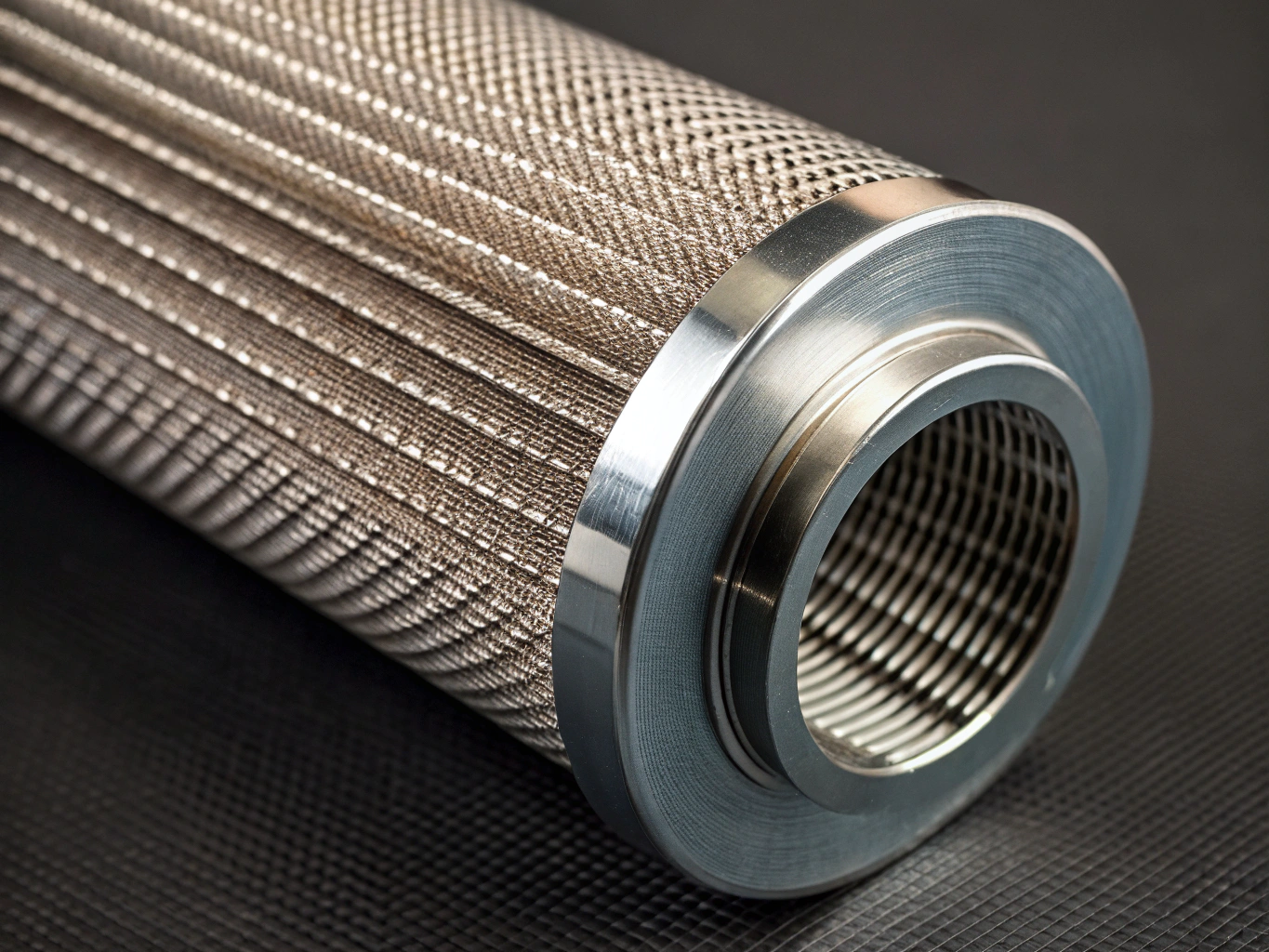
In pharmaceutical process streams, fine filtration protects product integrity where absolute purity, cleanability, and non-reactive contact with active pharmaceutical ingredients (APIs) are non-negotiable. Woven wire mesh cartridges and filter leaves ensure repeatable particle retention without shedding fibers or particulate matter.
MutualFilter specifies premium stainless steel alloys manufactured under tight dimensional tolerances. These surfaces resist repetitive sanitary wash cycles, ultrasonic scouring, and corrosive solvent recovery systems while maintaining exact aperture uniformity across every production batch.
Filtration Requirements
Key mechanical and metallurgical properties specified for GMP production lines.
Fine filtration and aperture rating
Down to 1 µmControlled aperture stability from 1 µm woven Dutch weave to 100 µm square mesh, preventing media migration into active pharmaceutical ingredients.
Cleanability and sterilization
Validated hygiene100% steam-in-place (SIP) and clean-in-place (CIP) compatibility. Smooth wire topography eliminates dead legs and bacterial retention points.
Stainless steel and alloy grades
Full traceabilityUltra-low carbon AISI 316L (1.4404) and corrosion-resistant Hastelloy C-22 for acidic solvent synthesis and demanding saline extraction.
Chemical and material compatibility
Zero extractablesChemically inert against harsh organic carriers, alcohols, and pure water for injection (WFI). Certified for pharmaceutical GMP standards.
Solutions & Product Options
Engineered wire cloth geometries tailored for rigorous separation and long cycle lifetimes.
Key Selection Factors
Critical parameters evaluated by our metallurgical engineering team during specification matching.
Fine aperture precision
Verified pore size distribution ensures predictable nominal or absolute particulate cutoff rates.
Cleanability & sterilization compatibility
Smooth surface pore walls enable ultrasonic regeneration, clean-in-place (CIP), and autoclave cycles.
Chemical & solvent compatibility
Inert surface passivity prevents media leaching across aggressive acid, alkali, and aromatic solvent streams.
Stainless steel alloy grade
Selecting 304, 316L, 904L, or nickel alloys to match chloride pitting resistance and thermal ceilings.
Structural integrity under repeated cycles
Solid metallurgical diffusion joints resist wire displacement and fatigue under pulsation differentials.
Need sizing or differential pressure calculations?
Our application engineers review micron ratings, flow rates, and fluid viscosity.
Specify mesh for your operating conditions.
Send your target aperture, alloy grade, and mechanical tolerances to receive technical verification and pricing from our engineering desk within one business day.
Filtration, screening, extrusion, or acoustic attenuation
AISI 304, 316L, 904L, Hastelloy, Monel, or Inconel
Square mesh or Dutch weave ratings from 2 μm to 5,000 μm
Continuous slit coils, stamped discs, cylinders, or framed screens
Temperature ranges up to 900°C, differential pressure, and acid exposure